The Science of Success in SBAC was written from the belief that student achievement cannot be understood through test scores alone. Academic success is connected to many invisible forces: school culture, literacy habits, emotional resilience, classroom systems, motivation, attendance, encouragement, focus, and the ability of students to persist when learning becomes difficult.
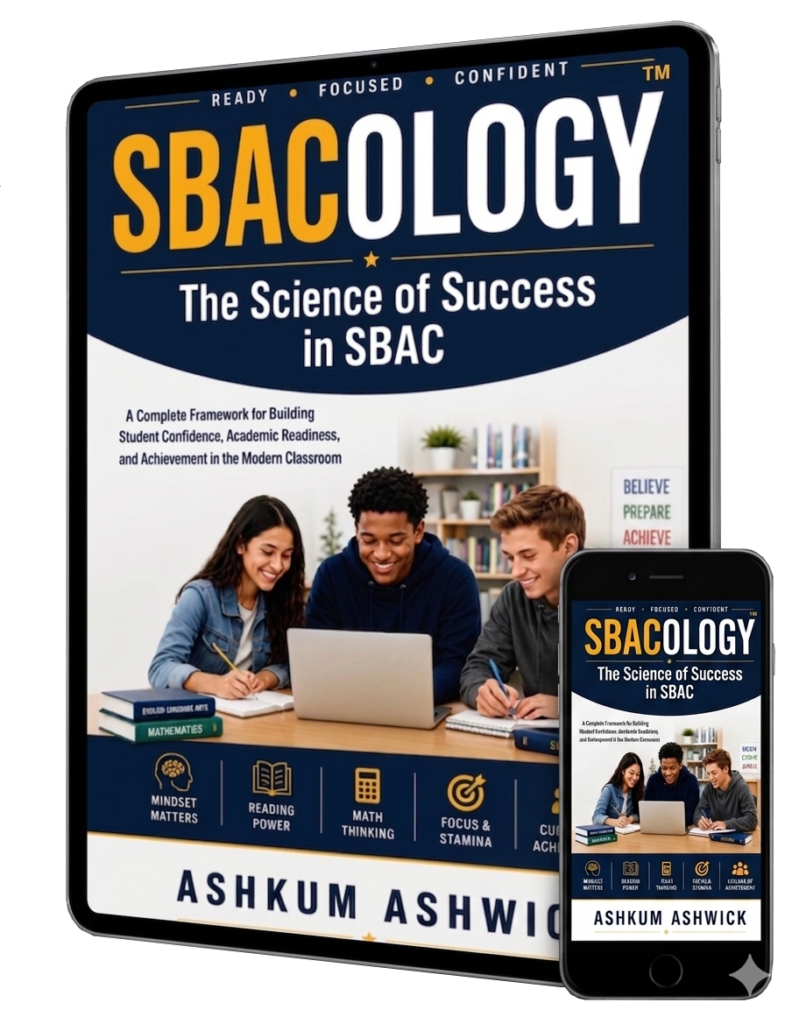
Across the United States, educators are confronting one of the most serious academic challenges in recent educational history. Classrooms today are carrying the weight of declining literacy rates, widening achievement gaps, shortened attention spans, increased anxiety among students, and the long aftereffects of pandemic learning disruption. State assessments such as the SBAC have become more than tests; they have become mirrors reflecting larger realities about student readiness, confidence, focus, and educational opportunity.
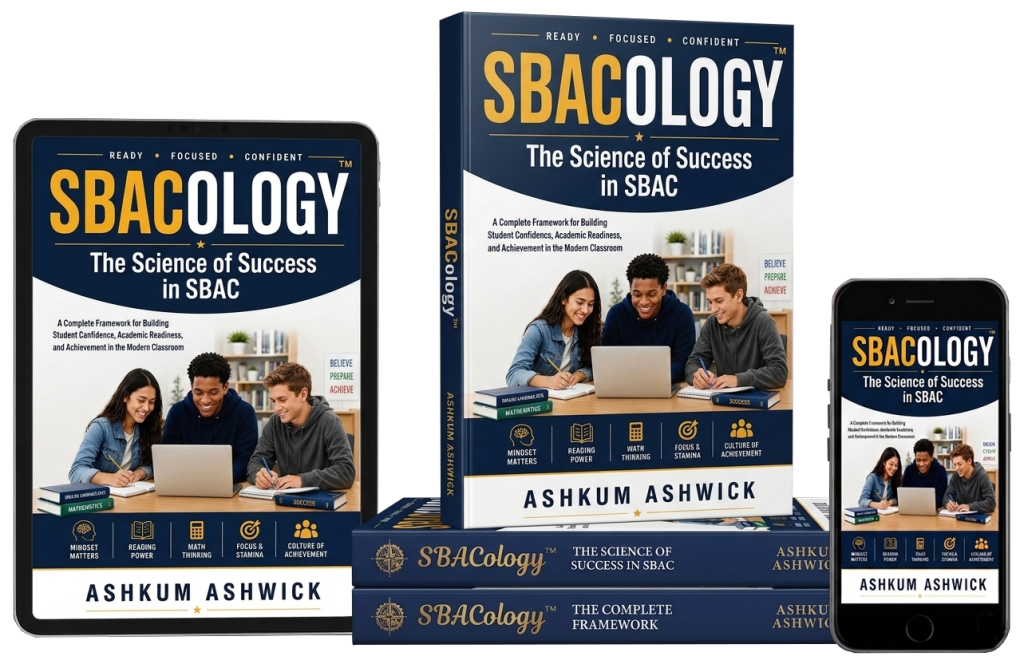

SBACOLOGY™: The Science of Success in SBAC was written from the belief that student achievement cannot be understood through test scores alone. Academic success is connected to many invisible forces: school culture, literacy habits, emotional resilience, classroom systems, motivation, attendance, encouragement, focus, and the ability of students to persist when learning becomes difficult.
The purpose of this book is not to present SBAC merely as an exam to pass. Rather, it seeks to examine the broader science behind student readiness and achievement in the modern classroom. Why do some students thrive under academic challenge while others withdraw? Why are attention and stamina becoming increasingly difficult for many learners? What role does confidence play in performance? How do routines, expectations, teacher language, and school climate influence outcomes? Why are many educators describing the current educational landscape as a national concern?
The word SBACOLOGY™ was intentionally coined to suggest a systematic study of the factors that contribute to success in the SBAC era. The concept extends beyond testing itself. It represents an interdisciplinary understanding of achievement — combining educational psychology, sociology, literacy development, student behavior, school culture, and academic preparedness.
This book also recognizes an important truth often overlooked in educational discussions: students do not rise academically through pressure alone. They rise through consistent support, structured expectations, meaningful encouragement, effective instruction, and environments that cultivate both discipline and hope.
In many schools, educators are discovering that academic recovery requires more than remediation. It requires rebuilding students’ relationship with learning itself.
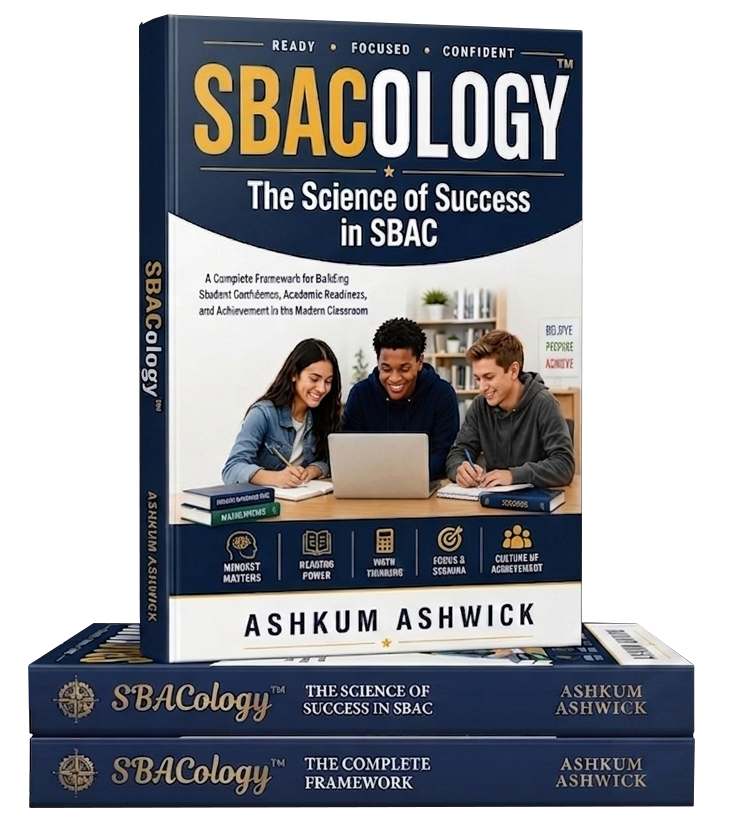
Although the SBAC serves as the central context for this discussion, the ideas presented throughout this book apply far beyond a single assessment. At its heart, this work is about helping students become thoughtful, capable, focused, and confident learners prepared not only for tests, but for life.
This book is written for teachers, school leaders, instructional coaches, intervention specialists, parents, and students themselves — all those who continue working with dedication and hope despite the immense challenges facing education today.
Every generation inherits educational responsibilities. Ours may be the responsibility of restoring confidence, attention, literacy, perseverance, and belief in learning during an age increasingly shaped by distraction and uncertainty.
And perhaps, in the years ahead, the true measure of success will not only be how many students passed a test, but how many rediscovered the confidence to believe they could succeed at all.

Ashkum Ashwick is an educator, poet, and reflective practitioner whose work bridges pedagogy, ethics, and lived school culture. He holds a Master’s degree in Sociology and graduated as University Topper in 1986. His academic foundation in sociology deeply informs his writing, particularly his exploration of character formation, institutional culture, moral development, and everyday human interaction within educational spaces.
Ashwick writes from experience rather than theory alone. His work is grounded in classrooms, hallways, routines, transitions, and the subtle moments between bells where culture is quietly formed. He views teaching as both instructional and relational—an ethical practice shaped by repetition, reflection, and intentional choice.
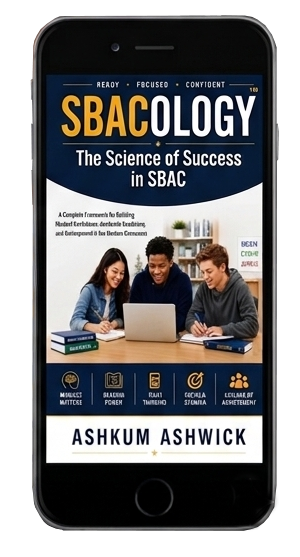
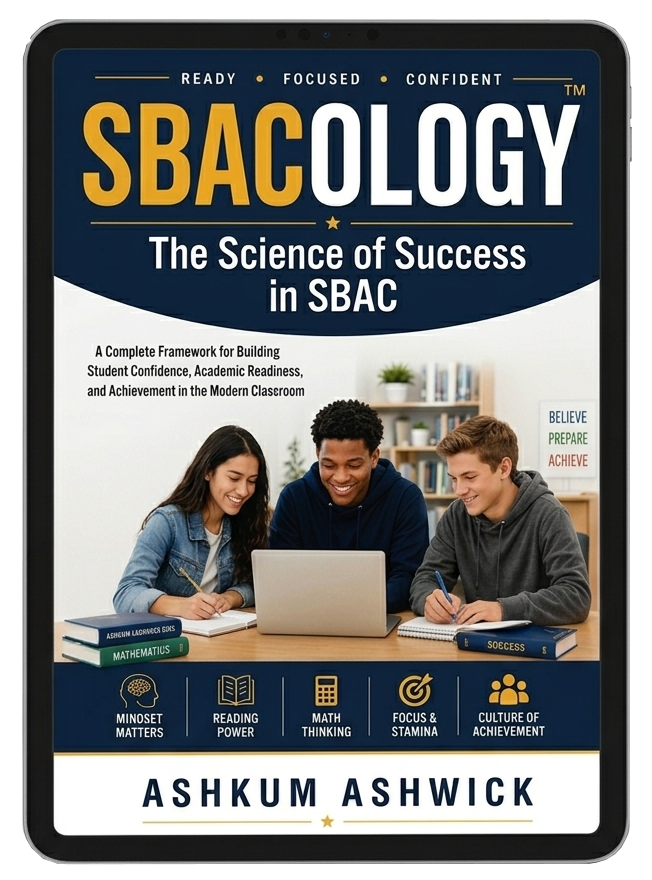
SBACOLOGY™: The Science of Success in SBAC is designed as both a reflective educational resource and a practical guide for improving student readiness, confidence, and academic performance in the SBAC era.
Although centered on SBAC preparation, the ideas and strategies presented throughout this book extend far beyond a single assessment. The goal is to help educators, students, and schools better understand the deeper factors that influence academic success.
This book may be used in several ways depending on the needs of the reader or school community.
Teachers may use this book:
Teachers are encouraged to adapt the ideas according to the developmental needs of their students and the realities of their classrooms.
This book emphasizes progress over perfection. Academic growth often happens gradually through consistent effort and resilience.
Students may use this book:
The book encourages families to view academic growth as a long-term developmental process rather than a single testing event.
Reflection and discussion are strongly encouraged throughout the reading process.
The purpose of this book is not merely to increase test scores. Its larger purpose is to help cultivate students who are:
Educational success is rarely produced by one factor alone. It emerges from the interaction of preparation, support, consistency, encouragement, discipline, and belief.
When schools strengthen those foundations, students are more likely to succeed not only in SBAC, but in the broader journey of learning itself.